BIKING 6days/5nights NHA TRANG to HUE
Highlight: The kingdom of Champa (Campadesa or nagara Campa in Cham and Cambodian inscriptions written in Sanskrit; Chăm Pa in Vietnamese, Chiêm Thành (占城) in Hán Việt and Chen Ching in Chinese records) was an Indianized kingdom of Malayo-Polynesian origins and controlled what is now southern and central Vietnam from approximately the 7th century through to 1832. www.vietnambiketours.com Champa was preceded in the region by a kingdom called Lin-yi (林邑, Middle Chinese *Lim Ip) or Lâm Ấp (Vietnamese) that was in existence from 192 AD, but the historical relationship between Lin-yi and Champa is not clear. Champa reached its apogee in the 9th and 10th centuries AD.
Thereafter began a gradual decline under pressure from Đại Việt, the Vietnamese polity centered in the region of modern Hanoi. In 1471, Viet troops sacked the northern Cham capital of Vijaya, www.vietnambiketours.com and in 1697 the southern principality of Panduranga became a vassal of the Vietnamese emperor. In 1832, the Vietnamese emperor Minh Mang annexed the remaining Cham territories.
Before the conquest of Champa by the Vietnamese king Lê Thánh Tông in 1471, the dominant religion of the Cham people was Hinduism, and the culture was heavily influenced by that of India. The Hinduism of Champa was overwhelmingly Shaivist, that is, www.vietnambiketours.com focussed on the worship of Shiva, and it was liberally combined with elements of local religious cults such as the worship of the Earth goddess Yan Po Nagar. The main symbols of Cham Shaivism were the linga, the mukhalinga, the jatalinga, the segmented linga, and the kosa.
A linga (or lingam) is a phallic post that serves as a representation of Shiva. Cham kings frequently erected and dedicated stone lingas as the central religious images in royal temples www.vietnambiketours.com. The name a Cham king would give to such a linga would be a composite of the king's own name and suffix "-esvara," which stands for Shiva.
A mukhalinga is a linga upon which has been painted or carved an image of Shiva as a human being or a human face.
A jatalinga is a linga upon which has been engraved a stylized representation of Shiva's chignon hairstyle.
A segmented linga is a linga post divided into three sections in order to represents the three aspects of the Hindu godhead or trimurti: the lowest section, square in shape, represents Brahma; the middle section, octogonal in shape, represents Vishnu, www.vietnambiketours.com and the top section, circular in shape, represents Shiva.
A kosa is a cylindrical basket of precious metal used to cover a linga. The donation of a kosa to the decoration of a linga was a distinguishing characteristic of Cham Shaivism. Cham kings gave names to special kosas in much the way that they gave names to the lingas themselves.
This 10th century Cham segmented jatalinga stands at the temple complex of My Son.The predominance of Hinduism in Cham religion was interrupted www.vietnambiketours.com for a time in the 9th and 10th centuries, when a dynasty at Indrapura (Dong Duong in Quang Nam Province of modern Vietnam) adopted Mahayana Buddhism as its faith. The Buddhist art of Dong Duong has received special acclaim for its originality.
In the 10th centuries and following, Hinduism again became the predominant religion of Champa. Some of the sites which have yielded important works of religious art and architecture from this period are, aside from My Son, Khuong My, Tra Kieu, Chanh Lo, and Thap Mam.
Brief Itinerary:
Day 1: Nha Trang - Qui Nhon 80km+ (L)
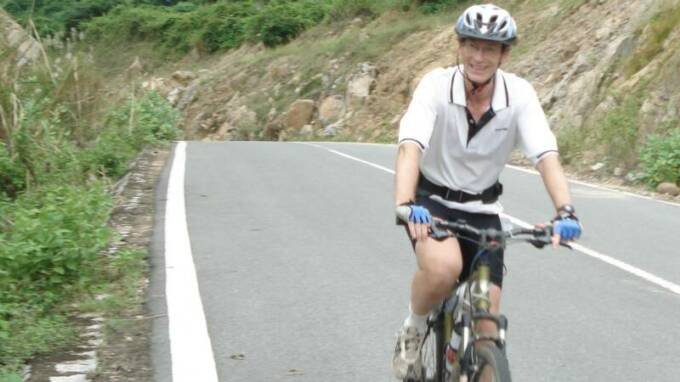
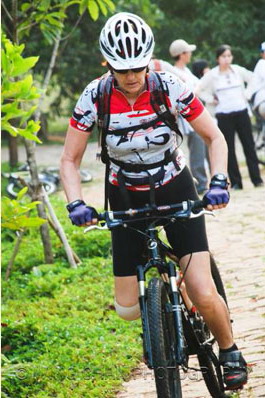
After breakfast at the hotel, we’ll drive to Co Ma. Upon arrival, we’ll unload the bikes and ride over the Co Ma pass to Dai Lanh for a break at the beach. Then, we’ll ride up to Ca pass and to Tuy Hoa for lunch. In the afternoon, Vietnam Bike Tours’ll have a quick (1hr) transfer to Song Cau before riding to Qui Nhon for the night.
Day 2: Qui Nhon - Quang Ngai 90km+ (B,L)
We’ll enjoy a morning ride from the hotel to Phu M and Binh Duong along the coast. Then, we’ll transfer to Sa Huynh for lunch and a beach break. After lunch, we’ll hop back on the bus and transfer again; this time we’ll be headed to Duc Pho. Once in Duc Pho, we’ll cycle to Nghia Hanh and then continue on to our hotel in Quang Ngai for an overnight stay.
Day 3: Quang Ngai - Hoi An 50km+ (B,L)
We’ll begin the day with a ride from the hotel to the site of the My Lai massacre in 1968. Then, we’ll visit a school for charity and ride on to My Khe beach to enjoy lunch. In the afternoon, we’ll ride to Chau o before transferring to Hoi An for the night.
Day 4: Hoi An (B)
You’ll have the entire fourth day free. You may choose to cycle to My Son heritage, or just explore the city at your own leisure.
Day 5: Hoi An - Hue 70km+ (B,L)
You’ll warm up on a flat section for about 30km before a 10km climb to the top of Hai Van pass. We’ll take some time to admire the view, then we’ll cycle downhill to Lang Co beach for swimming and lunch. In the afternoon, we’ll transfer to Phuoc Tuong hill. From there, we’ll ride to Cau Hai lagoon and cross over into Vinh An. We’ll enjoy an exciting ride through Thuan An Beach (in the ghost city) before transferring to Hue for our overnight stay.
Day 6: Hue 30km+ (B,L)
After breakfast, we’ll cycle around Hue and visit attractions like Hue citadel, Thien Mu pagoda, Tu Duc tomb, and Minh Mang tomb. Then, we’ll return to the city center for a farewell lunch. Your guide will assist with your transfer to the airport for your onward flight.
Inclusive of:
- Air-conditioned bus
- Support vehicle to carry gear, luggage, first aid
- English speaking tour guide
- Entrance fees
- Airport transfer in/out
- Pick up & drop off at your hotel
- Meals as mentioned (B = Breakfast, L = Lunch, D = Dinner)
- All biking gear (bike, helmet, tool kit, water cage)
- Water, snacks, soft drinks, and fresh fruit on cycling days
- Accommodation
Exclusive of:
- Travel insurance
- Visa
- Personal expenses
Departure Dates: Daily
Group Size: Minimum of two and maximum of ten cyclists
Price: Rates vary. Please contact us to get the best possible price based upon your travel period and specific touring needs*